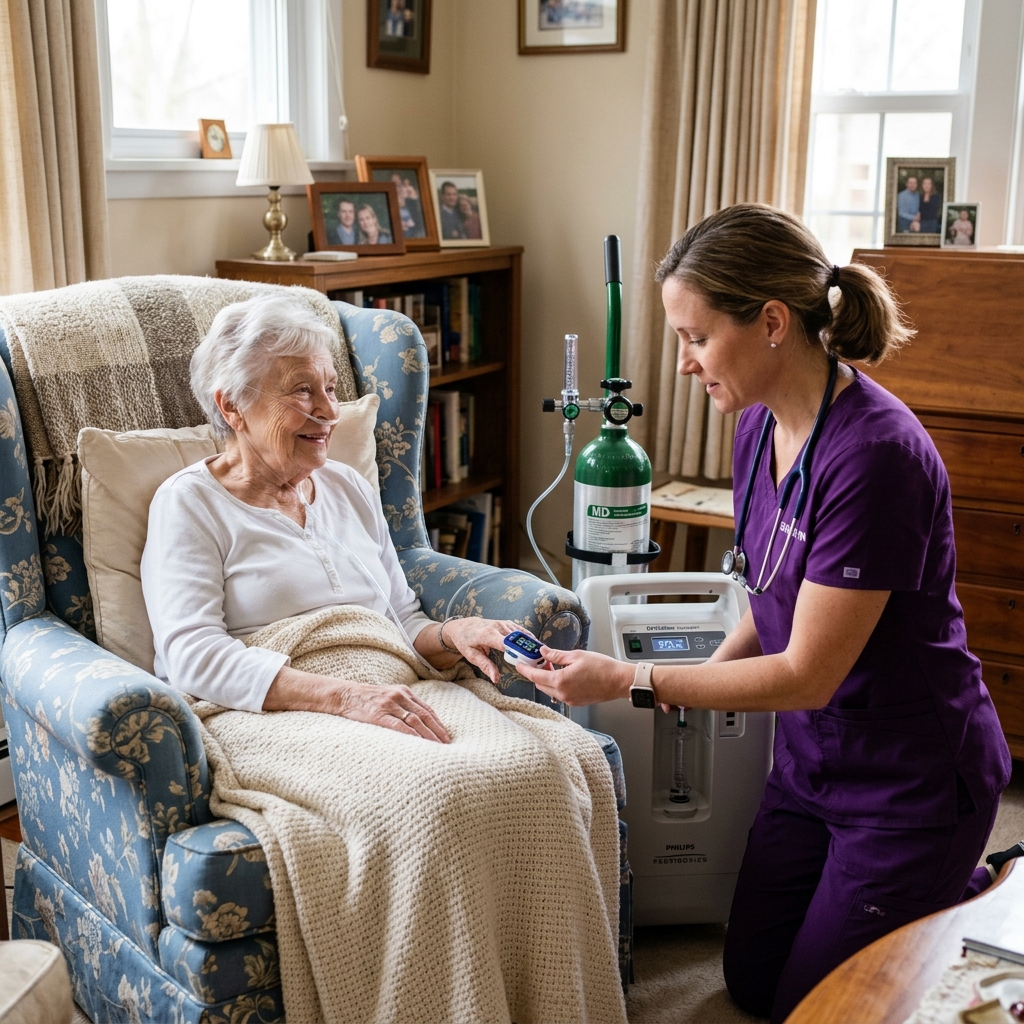
Oxygen (O2) Supply
Oxygen supply refers to the delivery of oxygen to patients to maintain adequate tissue oxygenation,
especially in conditions like hypoxia. Our professional team provides safe and reliable oxygen therapy
services at your home with proper equipment and continuous monitoring.
Sources of Oxygen Supply
Oxygen Cylinders
- Compressed oxygen in metal tanks
- Portable and lightweight
- Commonly used in emergencies
Central Oxygen System
- Oxygen supplied through pipelines
- Continuous supply for hospitals
- Convenient for multiple patients
Oxygen Concentrators
- Extract oxygen from atmospheric air
- Cost-effective solution
- Ideal for long-term home care
Methods of Oxygen Delivery
Nasal Cannula
- Low-flow system (1-6 L/min)
- Comfortable and widely used
- Suitable for mild oxygen needs
Simple Face Mask
- Moderate flow (5-10 L/min)
- Covers nose and mouth
- For moderate oxygen needs
Non-Rebreather Mask
- High concentration (~90-100%)
- Used in emergencies
- One-way valve system
Venturi Mask
- Precise oxygen concentration
- Color-coded adapters
- For controlled O2 therapy
Indications for Oxygen Therapy
- Hypoxia - Low oxygen levels in the blood
- Respiratory diseases - COPD, asthma, pneumonia
- Cardiac conditions - Heart failure, acute MI
- Shock or trauma - Emergency stabilization
- During anesthesia or surgery - Peri-operative support
- Mechanical ventilation - For critically ill patients
Advantages of Oxygen Therapy
- Improves oxygenation: Restores adequate oxygen levels in blood and tissues
- Reduces breathlessness: Provides immediate relief from dyspnea
- Prevents organ damage: Protects vital organs from oxygen deprivation
- Supports recovery: Aids healing in post-surgical and critical care patients
Complications / Risks
- Oxygen toxicity: High concentration for prolonged duration can cause lung damage
- Dryness of airways: May occur without proper humidification
- Fire hazard: Oxygen supports combustion - strict safety measures required
- CO2 retention: Risk in COPD patients with uncontrolled high-flow oxygen
Nursing Responsibilities
- Monitor oxygen saturation (SpO2): Continuous pulse oximetry monitoring
- Ensure correct flow rate: As prescribed by the physician
- Check equipment regularly: Inspect cylinders, tubing, and connections
- Provide humidification: Prevent dryness of nasal and oral mucosa
- Educate patient about safety: No smoking, fire precautions near oxygen
- Document and report: Record vital signs and oxygen usage