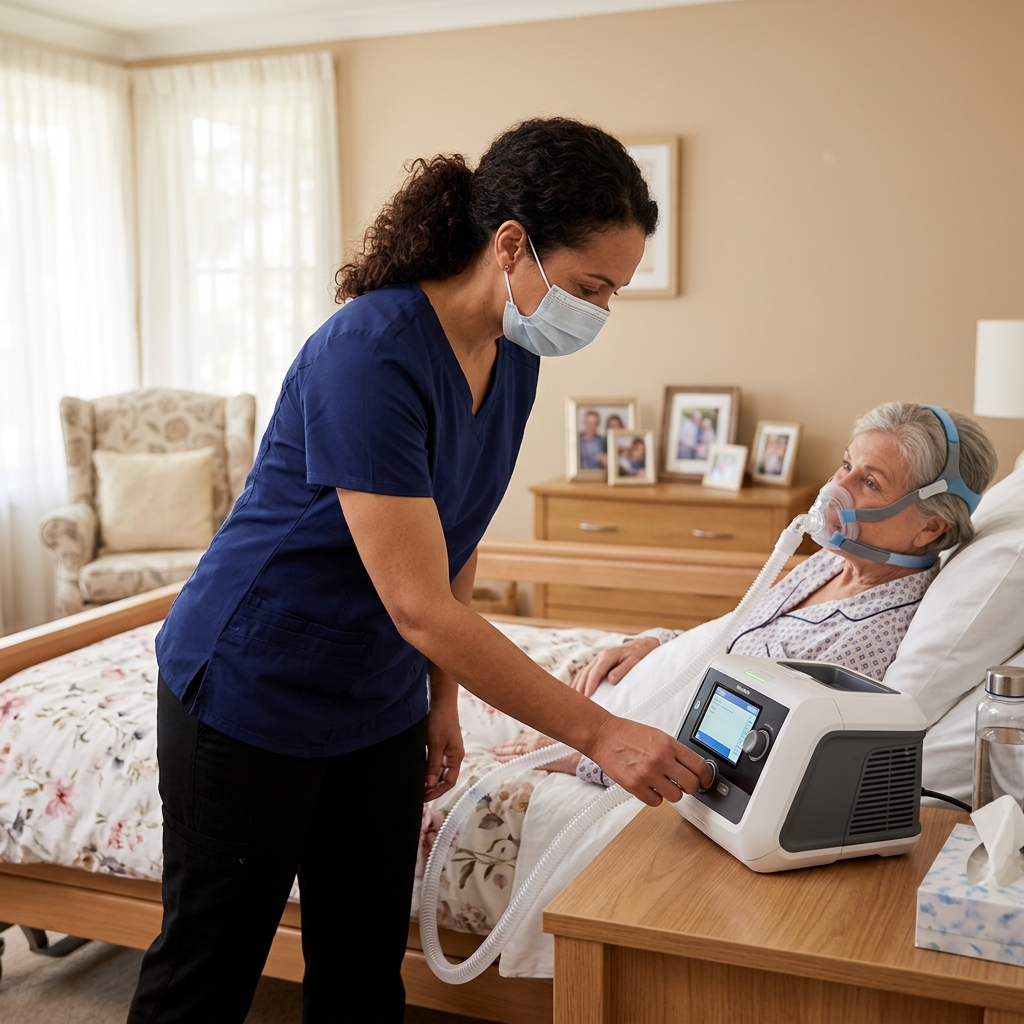
Home Ventilator Care
A home ventilator is a medical device that helps a person breathe when they cannot breathe adequately on
their own. It is commonly used at home for patients with chronic respiratory problems or after hospital
discharge. A home ventilator delivers oxygen into the lungs and removes carbon dioxide using positive
pressure.
How Does It Work?
A home ventilator delivers oxygen into the lungs and removes carbon dioxide using positive pressure. It can work through:
- Face mask (Non-invasive): Delivers air via a mask placed over the nose and/or mouth
- Tracheostomy tube (Invasive): Delivers air directly through a tube inserted into the airway
Conditions Requiring Home Ventilator
- COPD: Chronic lung disease requiring breathing support
- Neuromuscular disorders: Conditions like muscle weakness (e.g., ALS, muscular dystrophy)
- Post-ICU recovery: Patients transitioning from hospital to home care
- Sleep apnea: Severe cases requiring continuous airway support
- Spinal cord injuries: Affecting respiratory muscles
Types of Home Ventilators
1. Non-Invasive Ventilator (NIV)
- Uses mask (BiPAP/CPAP)
- Used for mild to moderate breathing problems
- Comfortable and easy to use
- Patient can speak and eat
2. Invasive Ventilator
- Uses tube inserted into airway
- Used in severe conditions
- Requires tracheostomy care
- 24/7 monitoring recommended
3. Portable Home Ventilator
- Small and battery-operated
- Can be used at home or during travel
- Lightweight and easy to carry
- Ideal for active patients
Why Choose Home Ventilator Care
- Comfort of Home: Patients recover better in familiar surroundings
- Trained Respiratory Therapists: Expert caregivers manage ventilator settings and maintenance
- 24/7 Monitoring: Continuous respiratory monitoring for safety
- Reduced Hospital Stays: Transition smoothly from hospital to home care
- Cost-Effective: More affordable than prolonged hospital care
- Family Involvement: Families can be trained to assist in care
Nursing Responsibilities
- Monitor respiratory parameters: SpO2, respiratory rate, tidal volume, and patient comfort
- Ensure proper ventilator settings: As prescribed by the physician
- Airway management: Regular suctioning and airway clearance
- Equipment maintenance: Check tubing, filters, humidifiers, and alarm systems
- Patient and family education: Train caregivers on basic ventilator operation and emergency procedures
- Infection prevention: Maintain hygiene and sterile techniques
- Document and report: Record vital signs, ventilator settings, and patient response
Emergency Support
- Round-The-Clock Availability: Emergency support available day and night
- Immediate Response: Quick action during critical respiratory situations
- Trained Medical Staff: Skilled respiratory therapists and nurses available
- Backup Equipment: Spare ventilator parts and emergency supplies maintained
- Rapid Communication: Quick coordination with pulmonologists and emergency services